

911 Backdate Mastery for Purists and Drivers

March 31, 2026
Why the 911 Backdate Still Captivates Enthusiasts
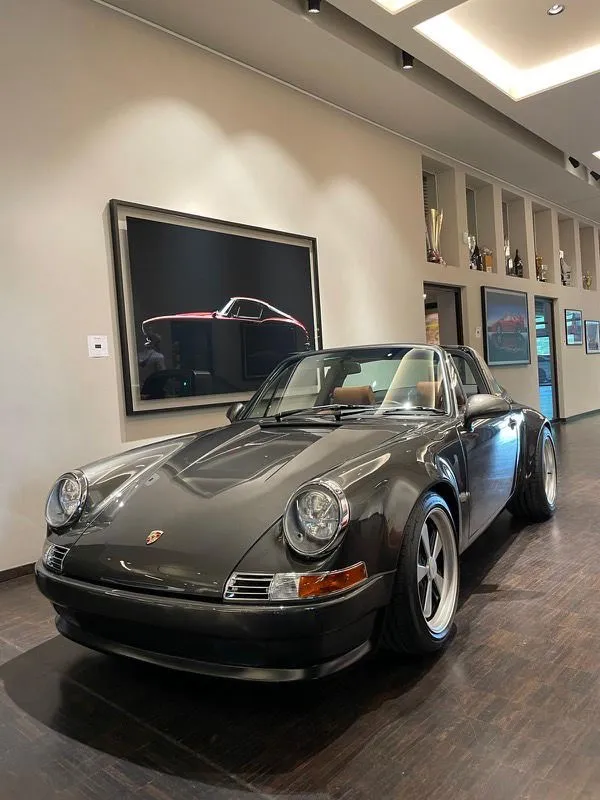
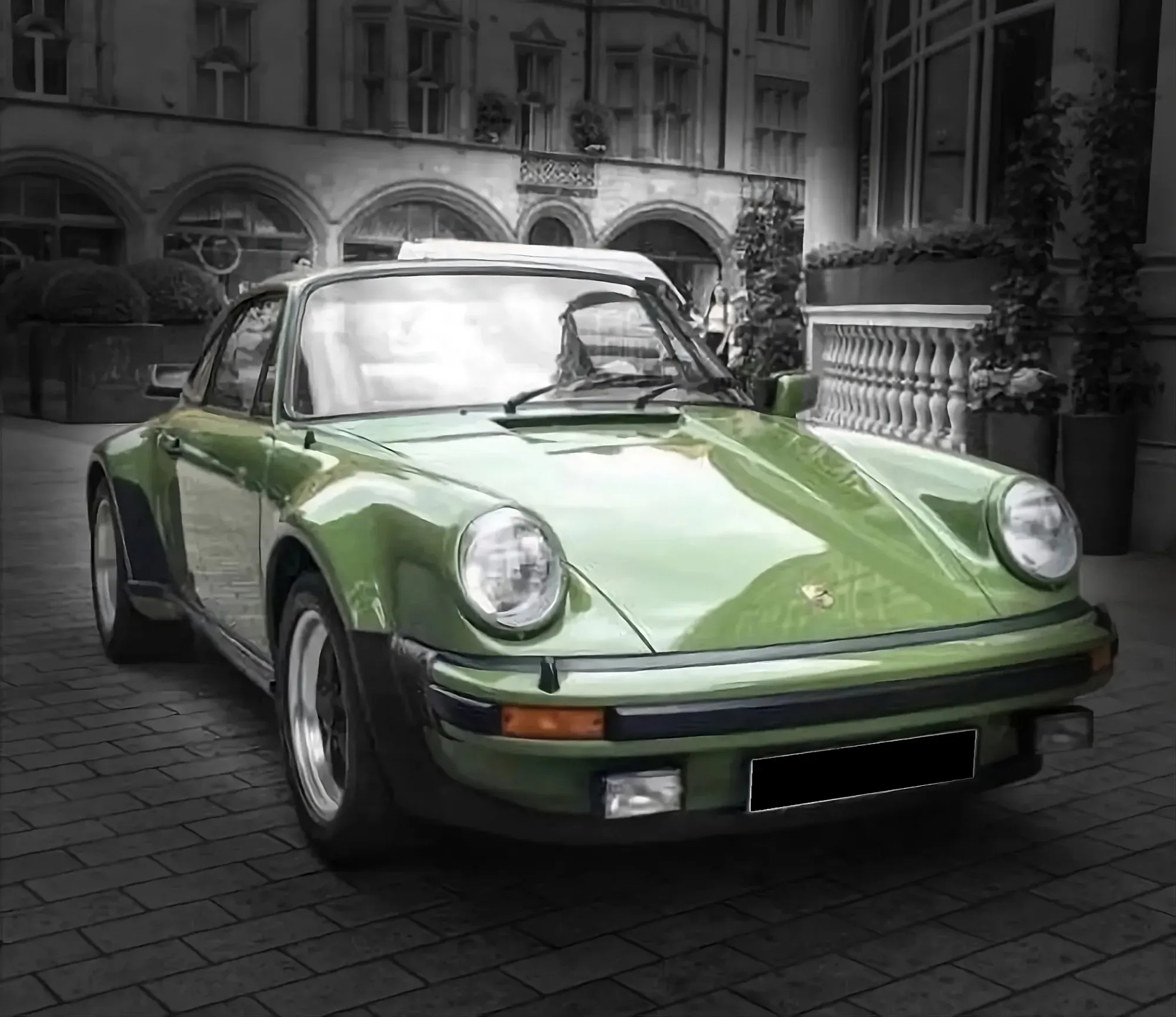
The idea behind a 911 backdate is refreshingly clear: take the visual language of the early Porsche 911 icons and combine it with the engineering depth of a later air-cooled donor such as a 964 or 993. You end up with a car that looks like a classic but steers, brakes, and covers distance like a modern sports car, without pretending to be an original period car. For many purists who actually want to drive, that balance is exactly the point.
Even now that well-known Californian specialists, such as Singer Vehicle Design, have stopped accepting new commissions, the 911 backdate concept continues to attract serious collectors and drivers. The formula works, and it works for the long term. It respects the heritage of the 911 while accepting that most owners want reliability, performance, and comfort that fit current expectations.
At PRINZIP R in Germany, we focus on this precise intersection of authenticity and usability. We work only with customers’ own air-cooled donor 911s, and our attention is on craftsmanship, proportion, and everyday drivability, not on building as many cars as possible. The result is a backdate that feels intentional and coherent, from the first glance to the first fast mile.
Understanding the 911 Backdate Concept
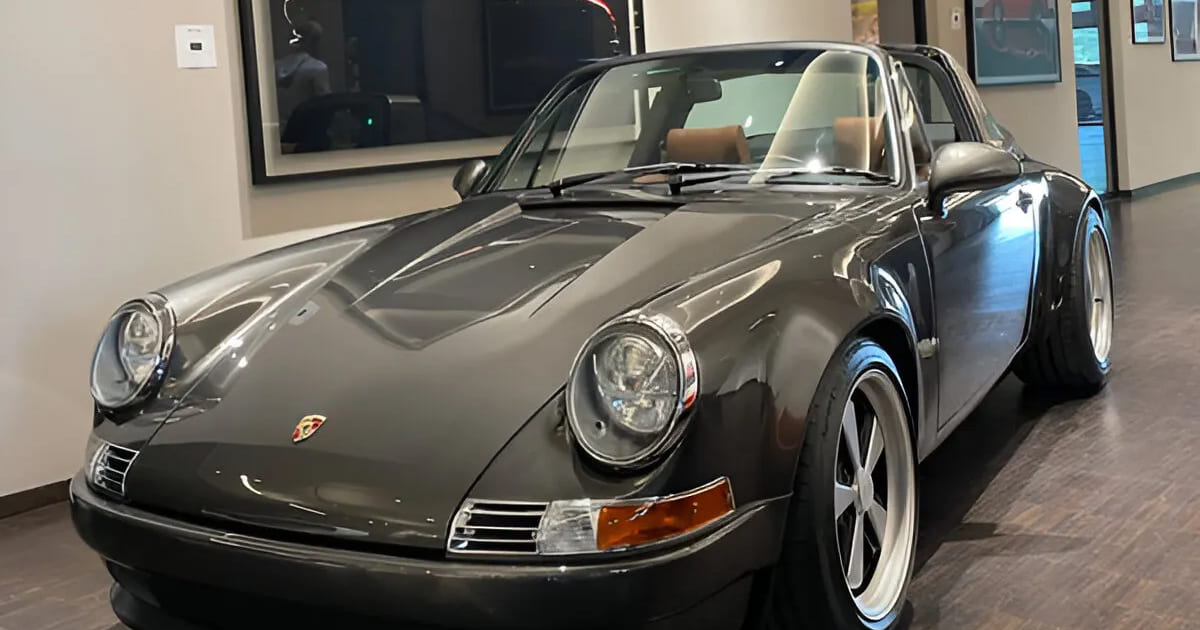
A 911 backdate is not a replica and not a shortcut to owning a rare factory 1970s car. It is a respectful reimagining of an air-cooled 911, typically starting with a 964 or 993, that adopts the character and aesthetics of earlier models while openly remaining what it is: a later, more capable chassis dressed in classic style.
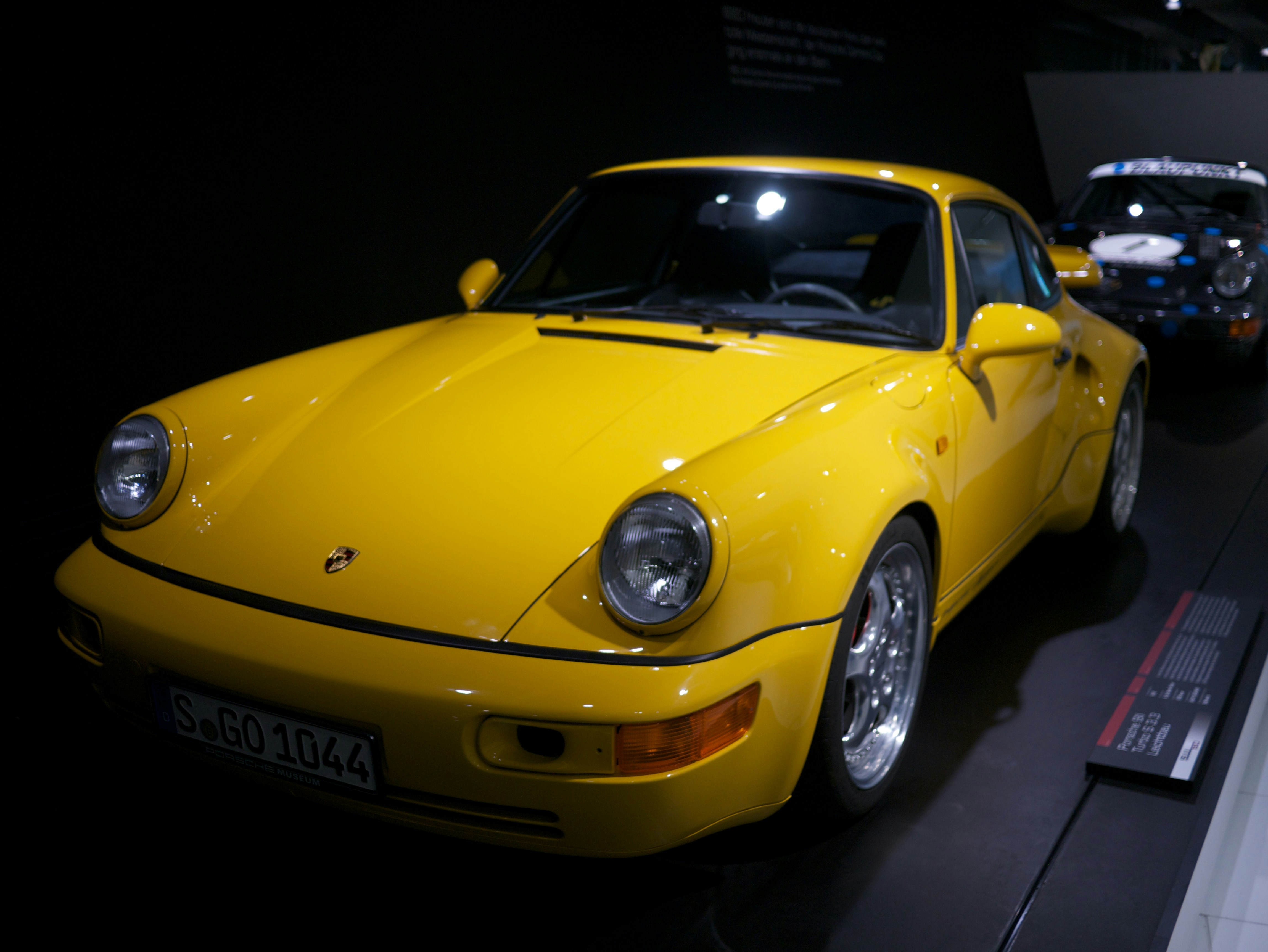
The 964 and 993 make ideal donor platforms because they bring.
- A stiffer, more evolved chassis than earlier generations
- Stronger brakes and more sophisticated suspension layouts
- Better corrosion protection and long-term durability
- Modern amenities that can be retained or toned down, depending on taste
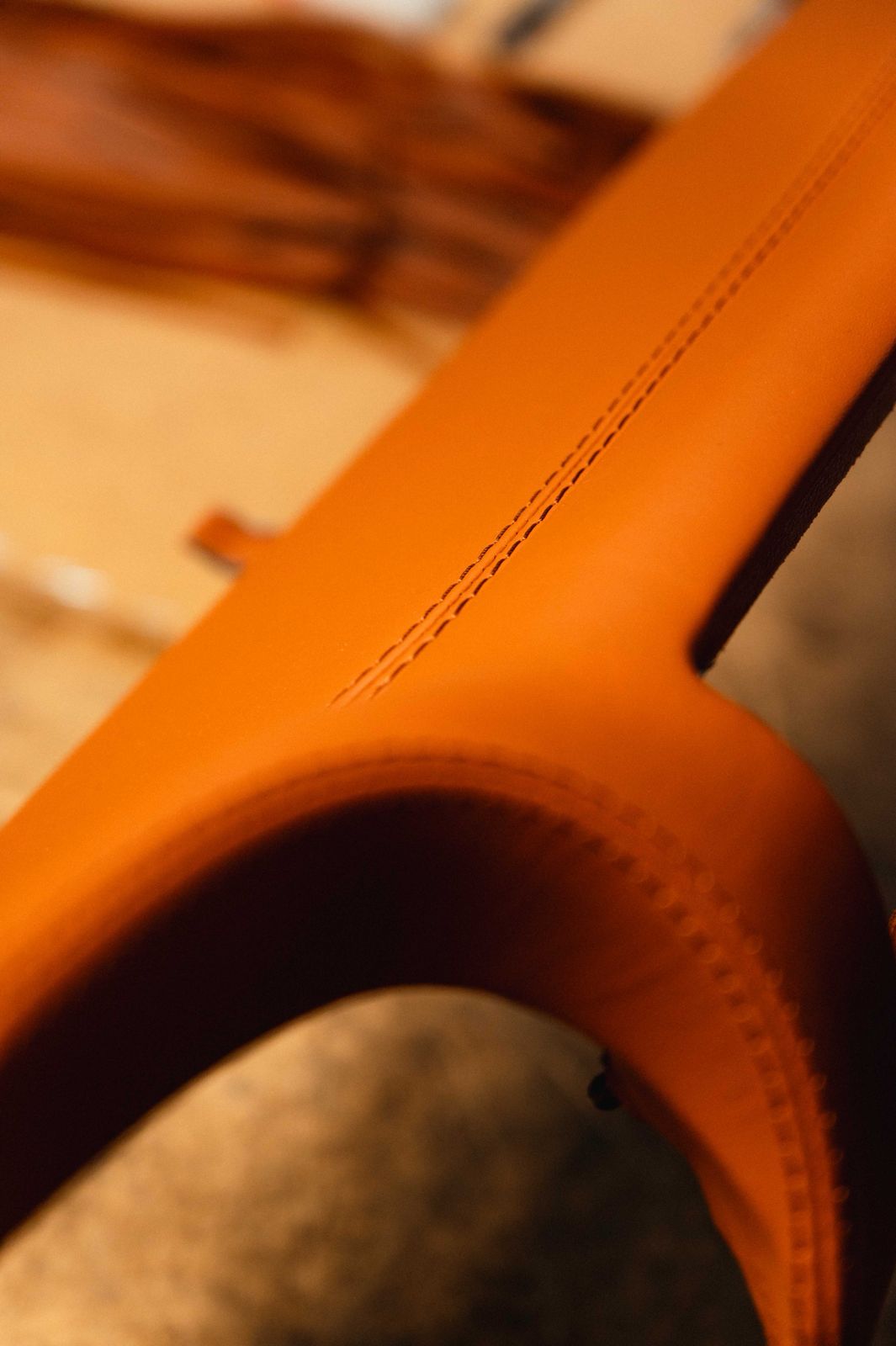
That mechanical foundation supports the artistic side of a backdate. Since the car is clearly not a factory 1970s original, there is room to reinterpret details: grille patterns, mirror shapes, interior textures, wheel styles, even lighting signatures. This freedom allows each car to express its owner’s preferences while still reading as a 911 at a glance.
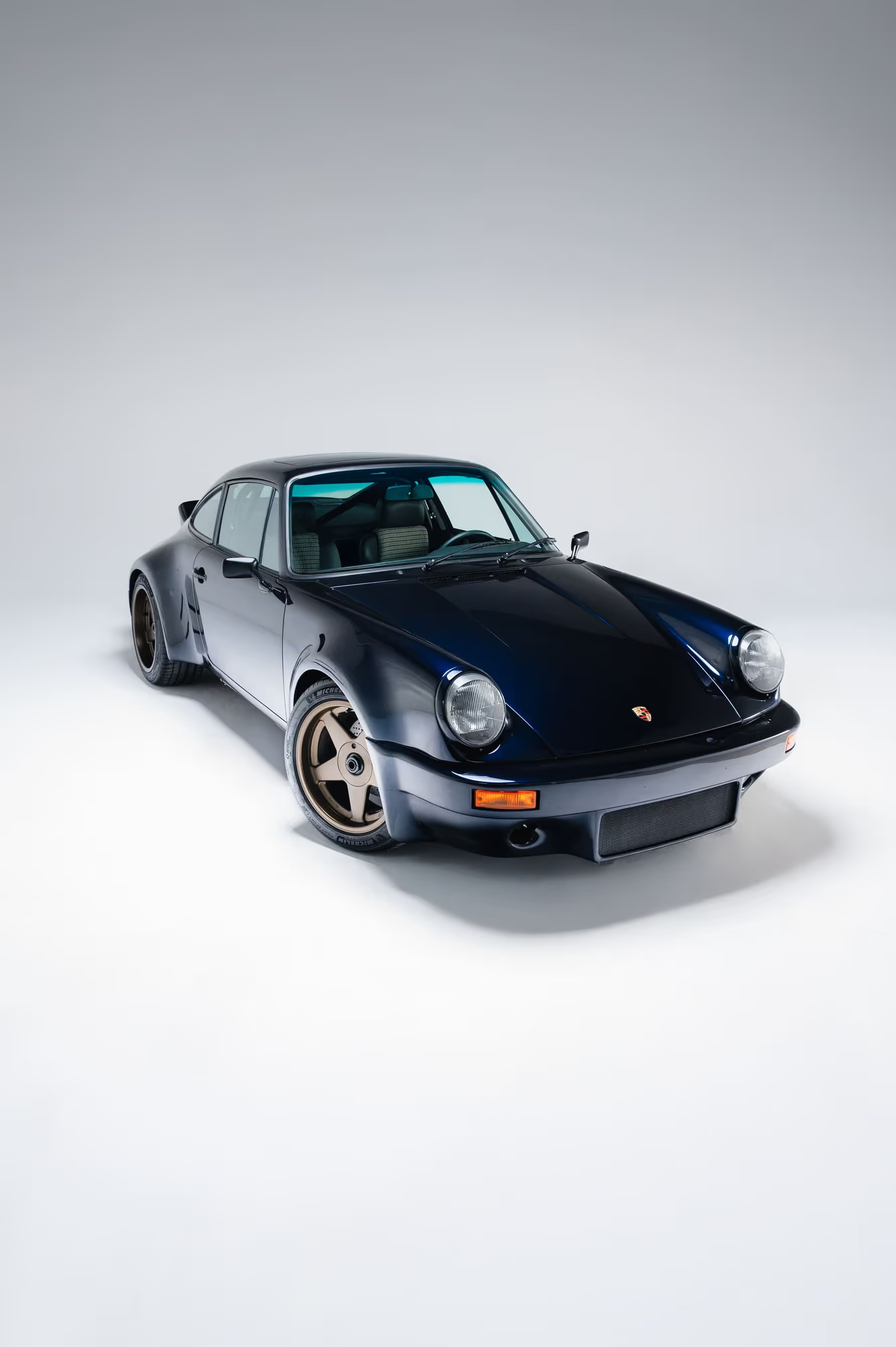
There is a wide spectrum in the 911 backdate world. At one end you have subtle OEM+ builds that might pass for a very clean, slightly updated classic. At the other end, there are more radical, motorsport-influenced interpretations. Our work at PRINZIP R typically lives closer to the purist, OEM+ side, with a focus on timelessness, usability, and the feeling that the car could have existed as a special factory project.
Steel vs Carbon and Why the Body Material Matters
Many high-end workshops use carbon fiber bodywork for their backdates. Carbon has obvious benefits, especially weight savings. It can be shaped into sharp, dramatic forms and, when done well, gives crisp panel edges and impressive performance potential.
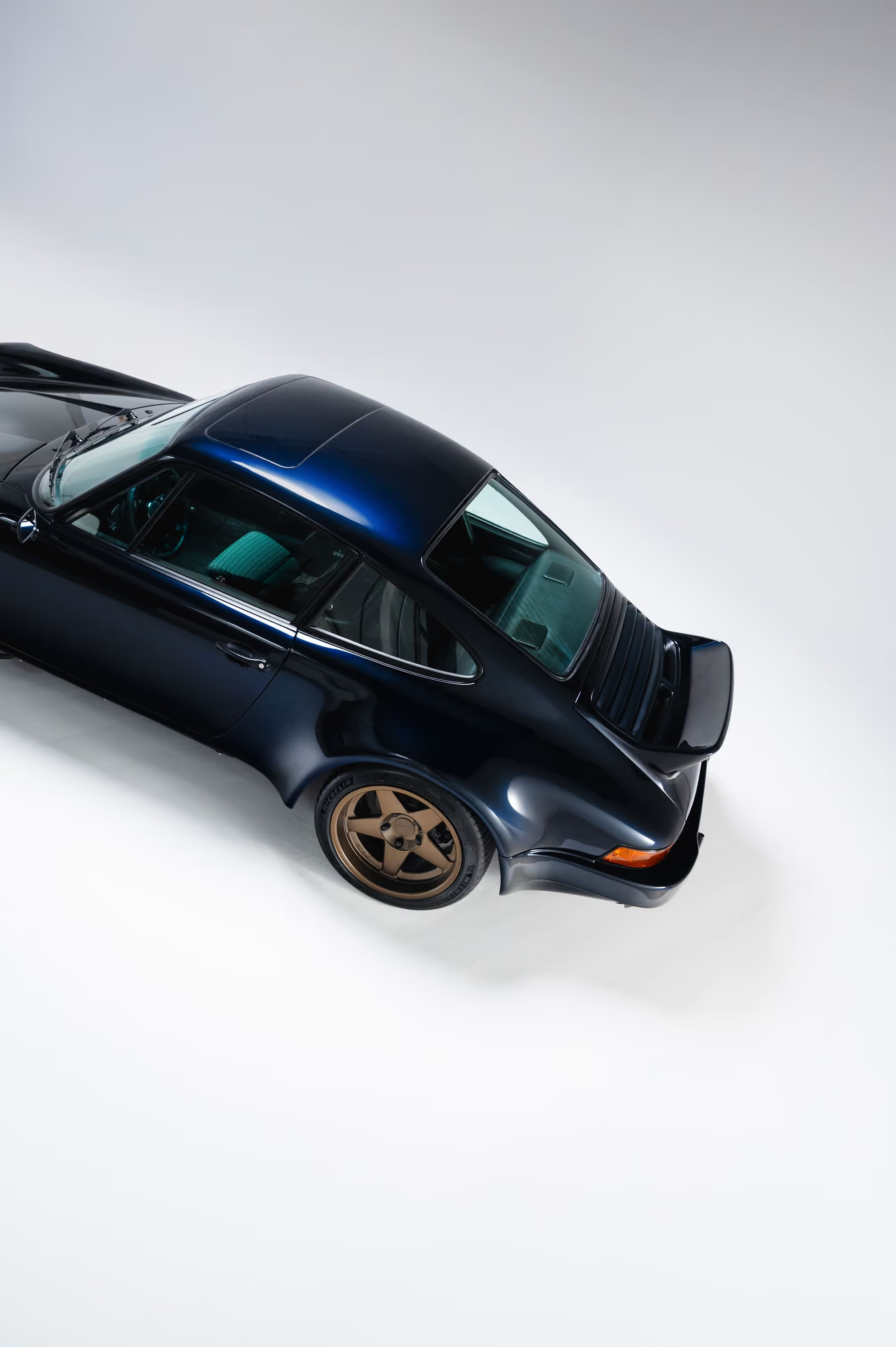
Our path at PRINZIP R is different: while many choose carbon, we focus on handcrafted steel. That choice is deliberate. Working in steel brings several advantages that matter to purists and long-term owners:
- Authenticity of feel when you touch, shut, and lean on the car
- Repairability in the event of damage, with familiar techniques and tools
- The way the car ages, with honest patina over time
- A mass and resonance that match the character of an air-cooled 911
Yes, steel is heavier than carbon, but with intelligent engineering, careful selection of components, and light construction where it really counts, we can keep weight very well controlled. In return, you get a body that feels like it belongs with an air-cooled 911, rather than a purely modern composite expression.
Hand-forming steel panels is skilled, patient work. Each curvature around the rear haunch, each leading edge of a front fender, each flare has to be coaxed into shape, not simply popped from a mold. That craft aligns with how Porsche approached its air-cooled era and with what discerning international clients expect from a truly special object.
Getting the Side View Right on a 911 Backdate
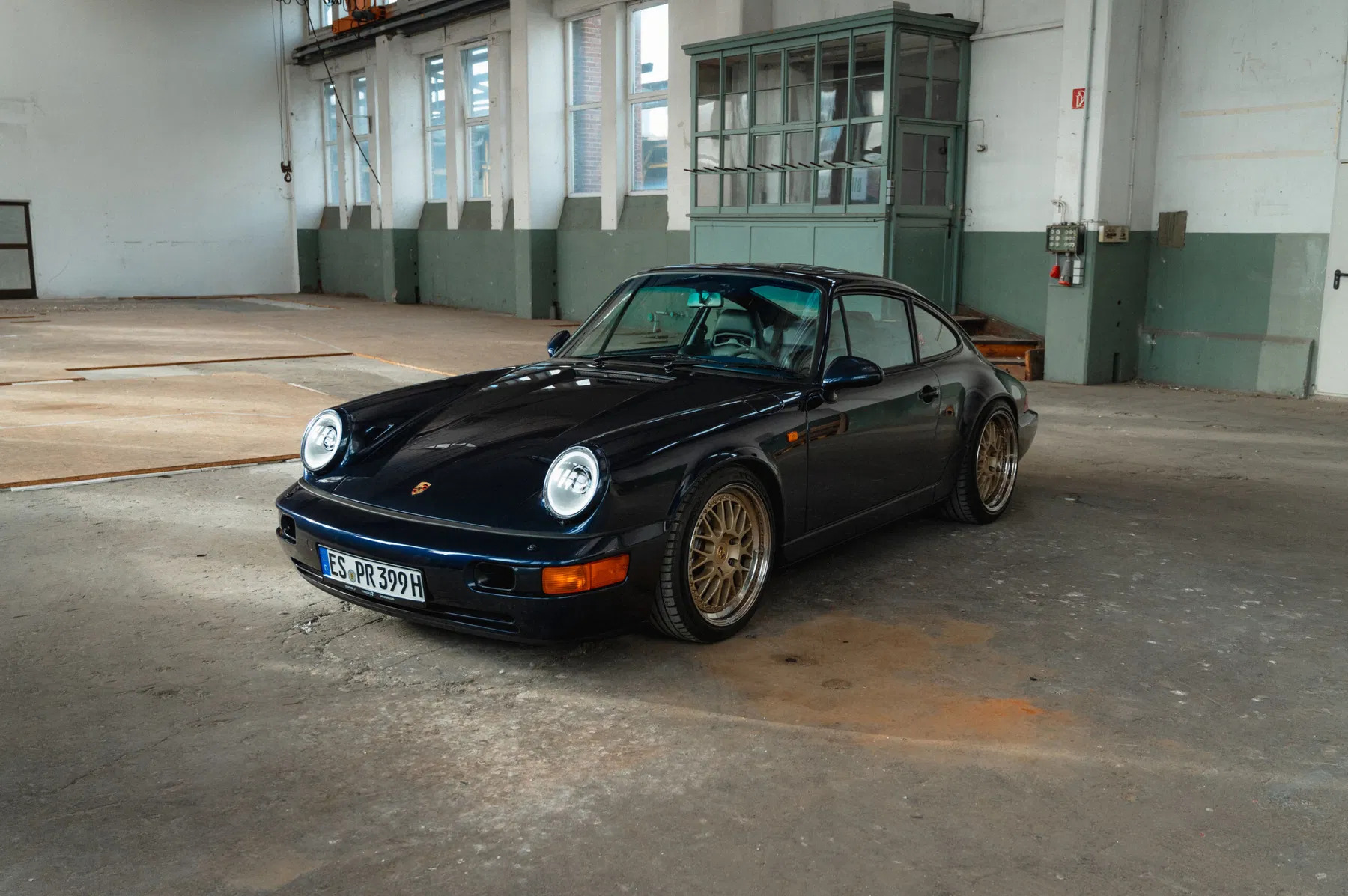
The side view is where a 911 backdate either succeeds completely or quietly fails. It is the purest test, because nothing hides: roofline, overhangs, ride height, wheel diameter, tire sidewall, and the full relationship between arches and body.
When you backdate a 964 or 993, some key proportions can easily slip:
- Bumper lengths that feel too short or too long for the shell
- Sill lines that do not tie visually into the arches
- Incorrect positioning or shape of torsion-bar style covers
- Wheel sizes that overpower the body or sit awkwardly in the wells
Many builds almost get it right. But a slightly high front ride height, a rear bumper that sits a few millimeters short, or arches that do not quite match the door shut can leave the car looking subtly off, even if you cannot immediately say why.
At PRINZIP R, we invest significant time in this single aspect. That includes mock-up stages with different ride heights, wheel and tire combinations, and bumper extensions until the car reads as natural and period-correct in silhouette, while still accommodating the geometry and wheelbase of the later chassis. When you are assessing a 911 backdate, study photographs from dead side-on and then walk the car in person from front three-quarter to rear three-quarter. Your eyes will quickly tell you if the story holds together.
Panel Gaps, Surface Quality, and the Feel of the Car
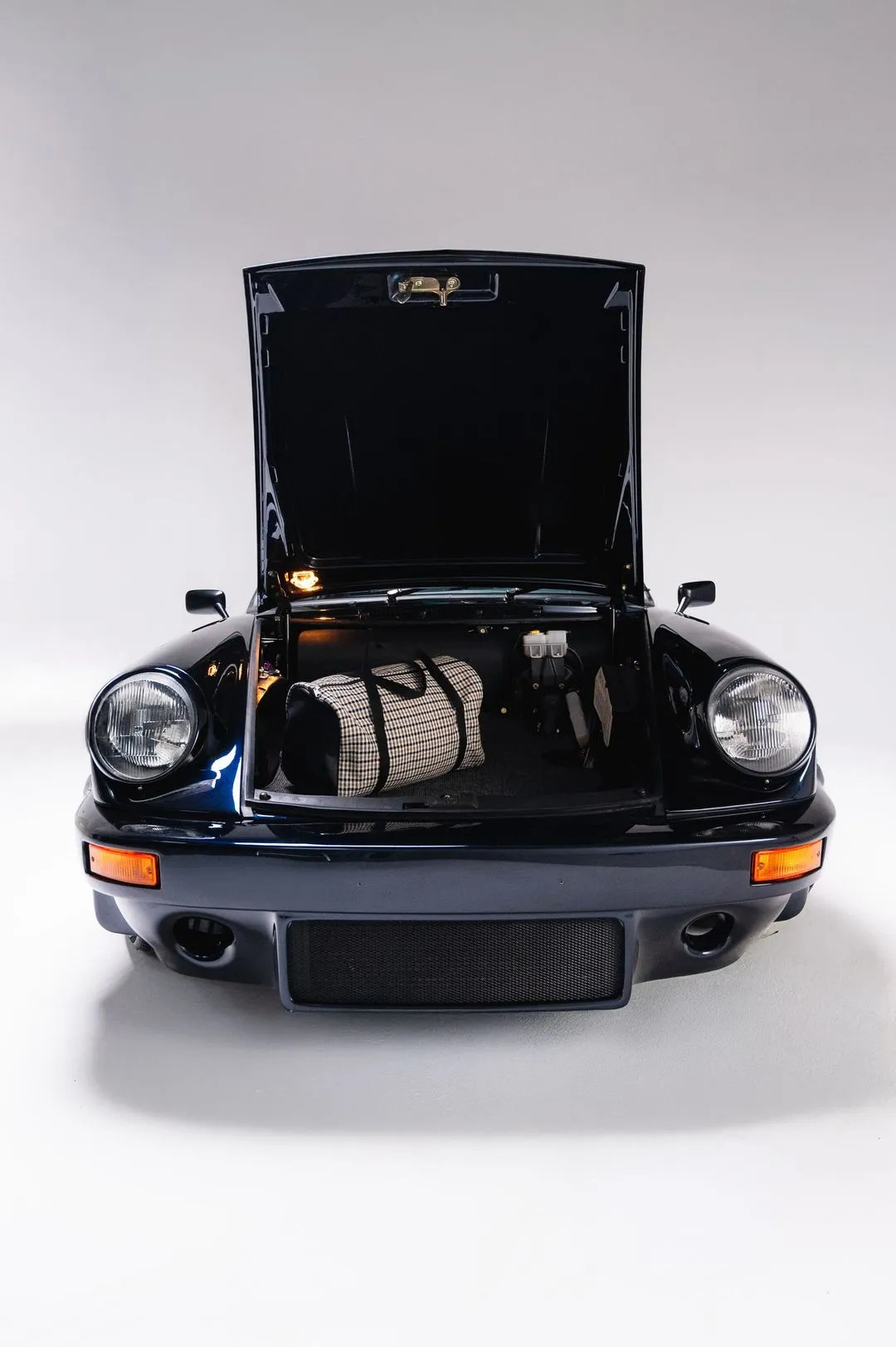
Panel gaps tell the truth about a build. On a 911 backdate, where new steel panels meet existing structure, consistent shut lines and precise fits are hard to fake. It is about.
- Even gap width from front to rear of each panel
- Symmetry from left to right
- Doors that latch with a solid, clean sound
- Lids and bumpers that sit flush with adjacent surfaces
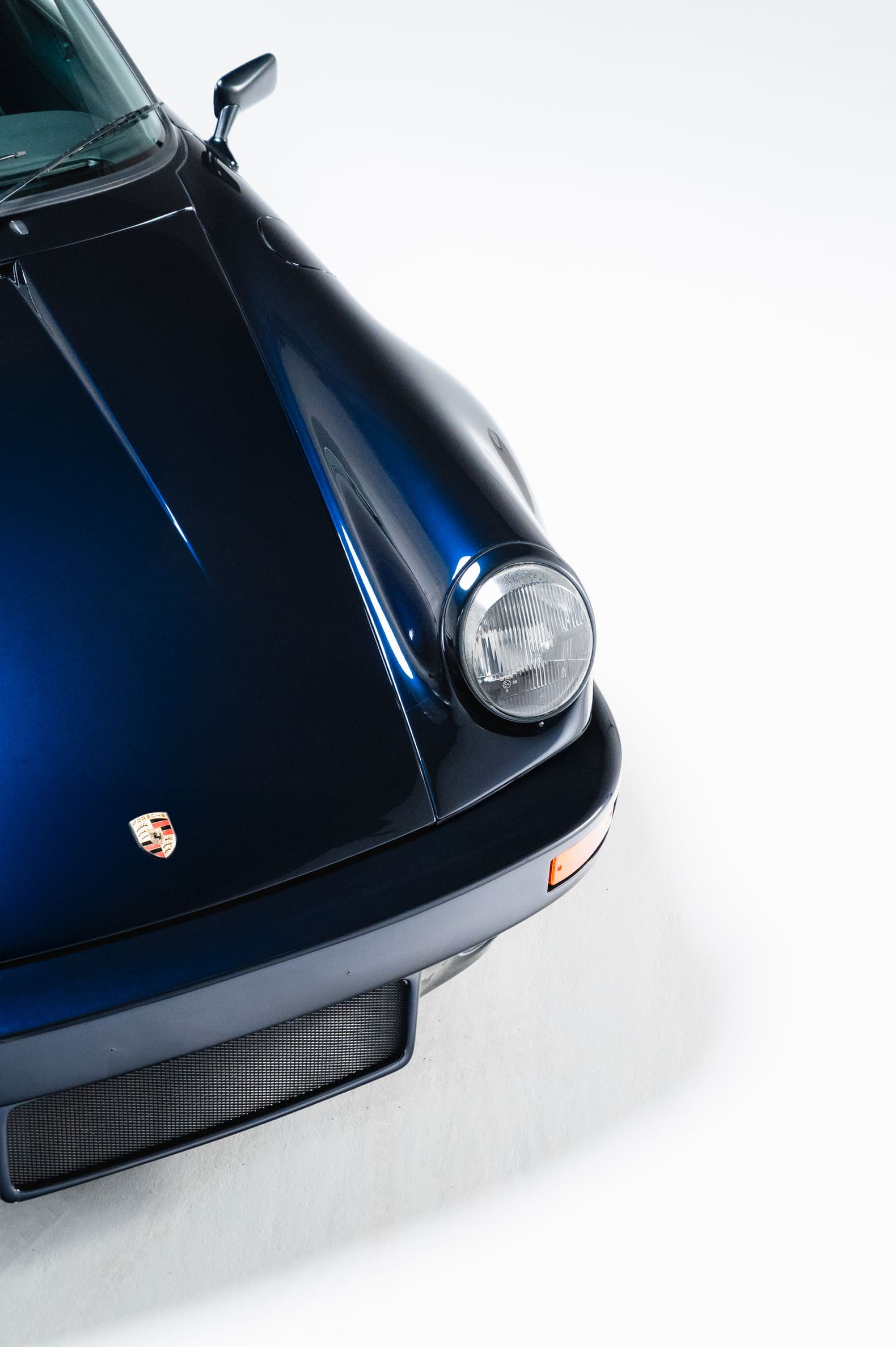
Surface quality matters just as much. The way light flows along a 911’s flank or across the front fenders reveals whether the underlying metalwork has been carefully shaped and finished or simply covered with filler and paint. Subtle ripples, flat spots, or waves will show themselves on a sunny day.
Panel fit is not only cosmetic. On the road, tight and well-aligned panels reduce noise, vibration, and the sense of fragility. Opening and closing a door, lifting the rear lid, or pressing a bumper gently with your hand should all communicate solidity. At PRINZIP R, we apply disciplined German workshop standards to this, with measurable, repeatable tolerances so each car feels as coherent as it looks.
What to Look for and How to Match a Backdate to Your Vision
If you are considering commissioning or buying a 911 backdate, it helps to have a clear checklist in mind. At a minimum, look at:
- Donor selection and history, including documentation
- Body material, steel or carbon, and visible workmanship
- Stance and side profile, viewed in person and in photos
- Panel fit, gaps, and the way doors and lids operate
- Interior execution, from materials to ergonomics
Mechanically, ask how the engine specification, cooling system, brakes, and suspension geometry match the actual use you have in mind. A touring-focused car may call for a different setup than a track-biased one. Transparency is key: build records, alignment sheets, rust protection details, and a clear scope of modifications help you judge whether the car has been engineered to be driven, not only photographed.
Then there is the question of taste. We find that the best 911 backdates start with a well-defined vision from the owner. That might mean a particular era of Porsche design they respond to, a preference for a more understated or more motorsport-influenced look, or a cabin that leans either toward classic simplicity or discreet modern comfort. Our role is to translate that into a coherent specification using the customer’s donor 911, always with the understanding that we are not trying to compete with new Porsche models. Instead, we are creating a complementary, highly personal air-cooled experience that feels at home in their collection and on their favorite roads.
Start Your 911 Backdate Journey With Confidence
If you are ready to transform your classic Porsche into a uniquely tailored 911 backdate, we are here to guide every step. At PRINZIP R, we combine precise craftsmanship with a clear, collaborative process so you always know what is possible for your build. Share your ideas, goals, and timeline so we can shape a concept that fits both your vision and driving style. If you have questions or want to schedule a consultation, simply contact us to get started.
Handcrafted builds - specified to your personal preferences
%20(1)%20(1).avif)
.avif)





.jpeg)




.jpeg)
.avif)